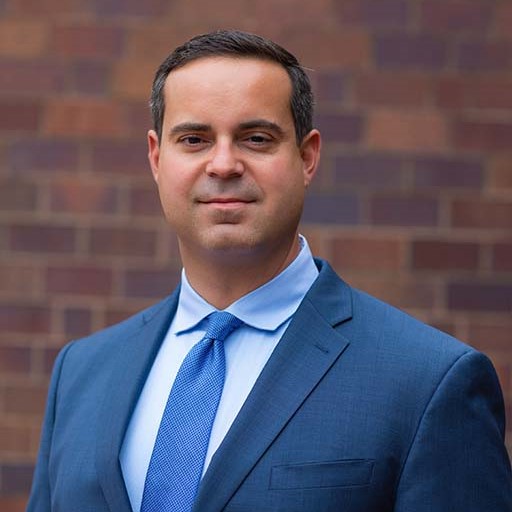
I am Corey Pollard – a Virginia workers’ compensation trial lawyer, managing partner of Corey Pollard Law within Jenkins Block & Associates, P.C., and the attorney who has recovered more than $100 million for injured workers and disabled Virginians. My practice covers Virginia workers’ compensation, Social Security disability, and serious injury cases including construction accidents and traumatic brain injuries – often involving workers’ compensation and third-party civil claims simultaneously within the same case. Before I represented injured workers, I defended employers and carriers. That background is why the other side knows my name – and why it matters to you.
Before I represented injured workers, I worked for a local insurance defense firm – the kind your employer and its insurance carrier probably hired after your accident. I sat in the meetings where adjusters decide whether to deny claims. I watched how reserve figures get set to minimize payouts. I learned the internal strategies that carriers use to classify a case as low-value, delay resolution, and reduce their exposure.
I left that work because I wanted to use what I knew for people who needed it. Not against them.
That background changes the math on your case in ways that are hard to explain quickly. When I’m building your claim, I already know what Sedgwick or Gallagher Bassett is looking for when they evaluate your file. I know which arguments they are trained to absorb and which ones actually move them. And I know that the defense attorney on the other side has billing targets, reporting requirements, and a claims handler who grades their performance – none of which has anything to do with the merits of your case.
When opposing counsel sees my name on a claim, they know I understand the playbook. They know I will not accept a lowball offer. And they know I will take the case to trial if they do not treat my client fairly.
Recognition
Peer-reviewed awards carry weight because they reflect how other attorneys – many of whom have opposed me – assess the quality of the work.
Professional Memberships
Bar Admissions
All state courts in Virginia
Education
Background
I grew up in Newport News, Virginia. My father started as a union electrician and built his own general contracting and welding company. Watching him do that – take skills he had developed working for someone else and build something of his own – is part of what pushed me toward building my own practice rather than spending a career inside someone else’s firm.
Growing up around that world, I also saw what large employers and insurers can do to workers who depend on their jobs and their health to support a family. The power imbalance is real. A national insurance carrier has lawyers, adjusters, medical consultants, and decades of claims data working in their favor from the moment an injury happens. The injured worker has a phone number and a stack of medical bills. That gap is what I have spent my career closing.
I attended the College of William & Mary, where I earned a Bachelor’s Degree with Honors, competed on the men’s swimming team, and joined the Sigma Alpha Epsilon (SAE) fraternity. Before college, I was a Virginia High School League State Champion in swimming at Menchville High School, a member of a national age-group record-holding relay, and I raced against Michael Phelps. He won. What competitive athletics taught me was not just how to prepare – it was that preparation done right reduces stress and creates room for the ability to think clearly when it matters most. That habit transferred directly to how I litigate catastrophic injury cases.
I earned my law degree with honors from the University of Richmond School of Law, where I competed on the Client Counseling and Negotiation Board and was selected to represent the school at an international arbitration competition in Europe. My first job was with an insurance defense firm. That choice was deliberate. I wanted to understand how the other side thinks before I decided which side to be on. What I did not expect was this: on the defense side, when a case ended, it ended. You closed the file. On this side, the outcome follows my client home for the rest of their life. That is why I switched, and that is why it matters to you that I did.
Outside the Office
My wife Leigh is a Human Resources Business Partner, which means I have a built-in resource when employment law issues come up alongside a workers’ compensation claim – a more common overlap than most people realize.
We have two kids, Knox and Rivers, who between them keep us at athletic events most weekends. I coach youth basketball through the Chesterfield Basketball League and the Bon Air Summer League. Coaching has reinforced something I already believed: smaller, less-experienced teams beat better-resourced opponents when they are more prepared and more disciplined. I work with kids who are routinely outmatched by bigger, faster, stronger opponents. The answer is never to hope the other side goes easy on you. The answer is to have a better system, know their tendencies, and execute when the moment arrives. That is also how you take on Sedgwick or Gallagher Bassett when they have assigned their most experienced defense attorney to your case.
The attorneys who are most creative under pressure tend to be the most organized ones. Chaos does not produce insight – a good system does. I train seriously for the same reason. When the fundamentals are handled and the plan is built, your mind is free to work on what actually matters: the case theory the carrier has not anticipated, the argument that changes how a deputy commissioner sees the facts.
I remain loyal to the Washington Commanders, which has required a kind of long-term commitment to an uncertain outcome that has served me reasonably well in litigation.